
A heart attack can happen suddenly, but its warning signs are not always dramatic. Some people experience intense chest discomfort, while others may notice shortness of breath, unusual tiredness, nausea, sweating or discomfort in the arms, back, neck or jaw.
Recognizing heart attack symptoms early is important because a heart attack requires urgent medical attention. According to the American Heart Association, common warning signs include chest discomfort, discomfort in the upper body, shortness of breath, nausea, lightheadedness and cold sweating.
What Is a Heart Attack?
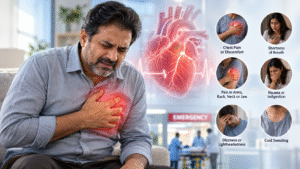
A heart attack occurs when blood flow supplying the heart muscle becomes severely reduced or blocked. This can happen when plaque builds up inside the coronary arteries and a blockage develops.
Because the heart muscle needs a continuous supply of oxygen-rich blood, prolonged blockage can damage the heart muscle. Rapid medical evaluation and treatment are therefore important when heart attack symptoms appear.
Common Heart Attack Symptoms
The symptoms of a heart attack can vary from person to person. Some of the most common signs include:
1. Chest Pain or Discomfort
Chest discomfort is one of the most recognized signs of a heart attack. It may feel like:
- Pressure or squeezing
- Tightness or fullness
- Pain or discomfort in the center of the chest
- Discomfort that lasts for several minutes or goes away and returns
Not every heart attack starts with severe chest pain. Symptoms can sometimes begin gradually and may initially feel mild.
2. Pain or Discomfort in the Upper Body
Heart attack-related discomfort may extend beyond the chest. It can occur in:
- One or both arms
- Shoulders
- Back
- Neck
- Jaw
- Upper abdomen or stomach
This is why unexplained discomfort in these areas, especially when accompanied by other symptoms, should not simply be ignored.
3. Shortness of Breath
Difficulty breathing or feeling unusually short of breath can occur with or without chest discomfort.
If sudden or unexplained breathlessness occurs along with chest discomfort, sweating, nausea or weakness, urgent medical assessment is important.
4. Nausea, Vomiting or Indigestion-Like Feeling
Some people may experience nausea, vomiting or a sensation similar to indigestion during a heart attack.
Because these symptoms can also occur with many less serious conditions, they can sometimes be overlooked. When they occur together with chest discomfort, breathlessness or unusual weakness, they should be taken seriously.
5. Cold Sweating and Lightheadedness
Breaking out in a cold sweat, feeling dizzy or lightheaded, or feeling unusually weak can also occur during a heart attack.
Heart Attack Symptoms in Women
Heart attack symptoms in women can sometimes be less obvious.
Chest pain or discomfort remains a common symptom, but women may also experience:
- Shortness of breath
- Nausea or vomiting
- Unusual tiredness or weakness
- Pain in the back, shoulder, arm or jaw
- Indigestion or stomach discomfort
- Lightheadedness
- Cold sweating
Because some of these symptoms can resemble digestive problems, stress or general fatigue, they may be dismissed. The American Heart Association emphasizes that women should also be aware of these less typical symptoms.
Can Heart Attack Symptoms Be Mild?
Yes. A heart attack does not always begin with severe or unmistakable pain.
Some heart attacks may start slowly with mild discomfort or symptoms that come and go. In some cases, symptoms may be unusual or difficult to recognize. This is one reason why unexplained symptoms involving the chest, breathing or upper body should not be ignored.
What Should You Do If You Suspect a Heart Attack?
If you or someone around you develops symptoms that could indicate a heart attack, seek emergency medical help immediately.
Do not wait to see whether the symptoms disappear on their own. Emergency medical services can begin assessment and treatment while transporting the patient to a hospital.
If you are in Panipat and experiencing potentially serious heart symptoms, seek urgent medical care rather than attempting to self-diagnose the condition.
When Should You See a Cardiologist?
You should discuss recurring or unexplained symptoms with a healthcare professional, particularly if you experience:
- Recurrent chest discomfort
- Breathlessness during activity
- Unexplained fatigue
- Palpitations or an irregular heartbeat
- Dizziness or fainting
- Pain or discomfort that repeatedly occurs during physical activity
- A known history of high blood pressure, diabetes or other cardiovascular risk factors
A cardiologist can assess your symptoms and determine whether further evaluation is needed.
How Can You Support Heart Health?
Heart health is influenced by several factors. Depending on your individual health condition, a healthcare professional may recommend:
- Regular physical activity
- A balanced diet
- Avoiding tobacco and smoking
- Managing blood pressure, blood sugar and cholesterol
- Maintaining a healthy weight
- Regular health check-ups
- Following prescribed medications correctly
The American Heart Association recommends adults aim for at least 150 minutes of moderate-intensity aerobic activity per week, when medically appropriate.
Heart Care at Artios Hospital, Panipat
Artios Hospital is a super-specialty hospital in Panipat offering dedicated cardiology services along with emergency care and diagnostic facilities. Its cardiology department provides evaluation and management for various heart-related conditions and offers procedures including ECG, echocardiography, angiography, angioplasty with stenting and pacemaker implantation.
Artios Hospital also provides multiple specialties, in-house diagnostics and 24×7 emergency services.
Conclusion
Knowing the heart attack symptoms can help you recognize when urgent medical attention may be necessary. Chest discomfort, shortness of breath, upper-body pain, nausea, cold sweating, dizziness and unusual fatigue can all be warning signs.
Symptoms can differ between individuals and may be less obvious in some women. If you suspect a heart attack, do not delay seeking emergency medical care.
This article is intended for general health awareness and does not replace medical diagnosis or treatment. If you are experiencing symptoms of a possible heart attack, seek emergency medical assistance immediately.